
Trends to the AI. Trades to TrendX.
Picking the coin, setting the numbers, dodging the traps — the AI does all three.


Five things the AI does. Not one of them is on you.
The rules are written
Both ways to play come with their rules written. You don't write them, and you don't learn a tool.
The AI reads the charts
What the lines look like and which kind of move it is — the AI reads that itself.
The AI watches 24/7
It runs on its own, including while you sleep.
The AI filters the coins
What's worth touching and what isn't — the AI filters first.
The AI runs the numbers
The settings for each coin are worked out one by one, and then machine-checked.
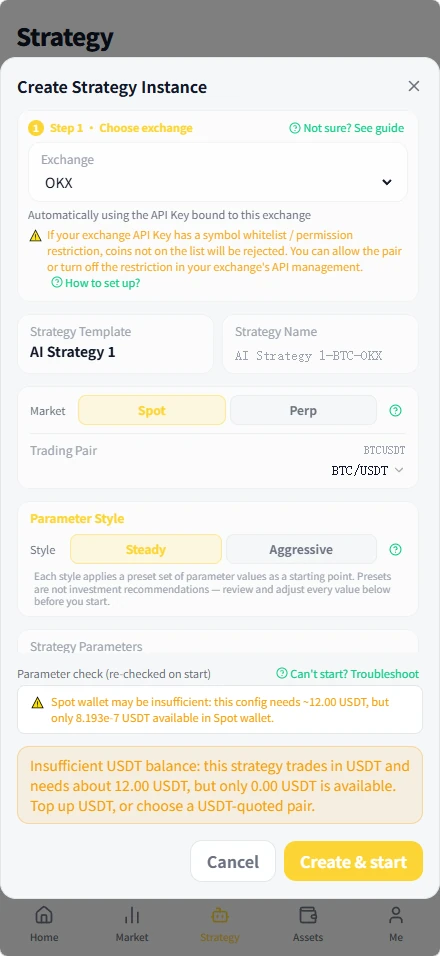
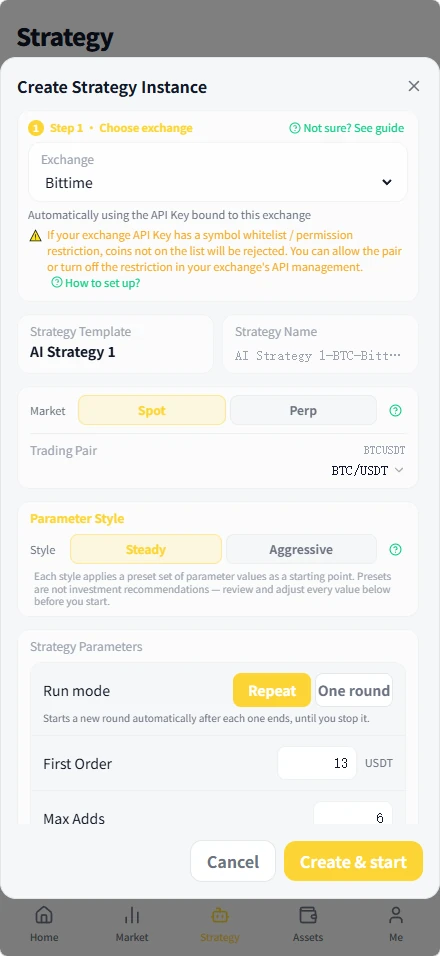
Two things are yours to do: connect your own exchange account, then press start.
The three hardest parts, the AI has already done for you
Picking
Hundreds of coins out there — which ones suit this right now, and which will trap you the moment you touch them.
Settings
Same coin, same method: put the numbers in wrong and a way of making money turns into a way of losing it.
Staying out
Some coins look busy and have nobody on the other side. When they fall, you can't even sell.
These three are where doing it yourself goes wrong most often. They're also where we've put the most work.
The hours you can't cover, it watches around the clock: which coins have moved into a shape that suits this, and which ones no longer do. What it judges is whether a coin suits this right now — not where the price goes next. Nobody knows that, and neither do we: what we give you is the basis for a judgement, not investment advice.
Others build tools. We build AI.
A tool needs you to know how to use it — pick the coin yourself, fill in the numbers yourself, judge for yourself whether it's safe to touch.
AI is different: picking, numbers, traps — it works them out first. Whether to start is your call.
A strategist does two things: keeps you out of fights you're not ready for, and finds the fights worth taking.
Your strategist, not your button.
What it does for you: finds the coins that suit this right now, and keeps the ones that trap you out.
1. Which coins suit this right now — it looks first
The classic mistake when you pick coins yourself is picking one that's on its way down, and then buying more all the way into a hole.

The system goes through every tradable coin on the exchange and looks at how it has moved over the last three days: back and forth, or heading one way and not coming back; how much ground it covered going back and forth; whether enough people are buying and selling.
Then it gives one of three answers: going back and forth / drifting one way / heading one way outright. The first suits this best. The third is the one to leave alone.
What it gives you is a call on whether now suits this — not where the price goes next. Nobody knows that, and neither do we: what we hand you is the basis for a judgement, not investment advice.
What it does for you: the numbers for each coin are worked out by AI and checked item by item — not just handed to you.
2. What each coin should be set to — the AI works it out, then it gets checked
Same coin, wrong numbers, and a way of making money turns into a way of losing it. This is where doing it yourself goes wrong most often, because you have no way of knowing what the right number is.

For every tradable coin, the AI produces four sets of numbers — a conservative one and a bolder one for each of the two ways to play.
Producing them isn't the end of it. Every set has to pass a machine check first: can it carry the trading costs, is each order above the exchange's minimum, is the bolder set actually bolder than the conservative one.
Anything that fails is thrown away — not stored, and never used on you.
What it does for you: you don't have to tell the traps apart — what doesn't qualify never reaches you.
3. Some coins simply don't get in
What trips up beginners isn't usually the market — it's the coin. Freshly listed shells, coins that look busy but have nobody on the other side, coins on their way to being delisted. When those fall, you can't even sell.

We keep a list. Only established, large- and mid-cap coins get in — mature chains, mainstream DeFi, that kind. What doesn't qualify never even gets recommended to you.
We don't chase the hottest new listing. Busy and safe-to-exit are two different things.
The market doesn't wait. You still have to sleep.
It runs around the clock. While you're at work, while you're asleep, it buys and sells by the rules you set.
The shortlist moves too — what suited this before and no longer does gets dropped; what has just moved into a shape that suits it gets picked up. You can't watch all of that. It watches for you.
"Couldn't I just do this myself?"
You could. You'd just have to solve three things first: picking coins means reading the market, getting the numbers right means trying many times before you know what fits, and staying out of traps usually means having fallen into one.
The hard part was never "make a program place orders" — those are everywhere. The hard part is those three, and nobody does them for you.
Those three are what we do.
Your money never passes through us
It stays in your own exchange account the whole time. We can't touch it.
What you give us is one access code: it can place orders, it cannot withdraw.
Want it back? Delete that code at your exchange. You don't have to ask us.
No exchange account yet? You need one first — the orders go into your account, not ours.
Open an account at BittimeYour own exchange account
Your funds and positions stay here
TrendX
Executes only. Holds nothing.
Two ways to play. Pick one.
AI Strategy 1
Buy in pieces as it falls, sell the whole round when it comes back
For when you like the coin and don't mind buying more on the way down
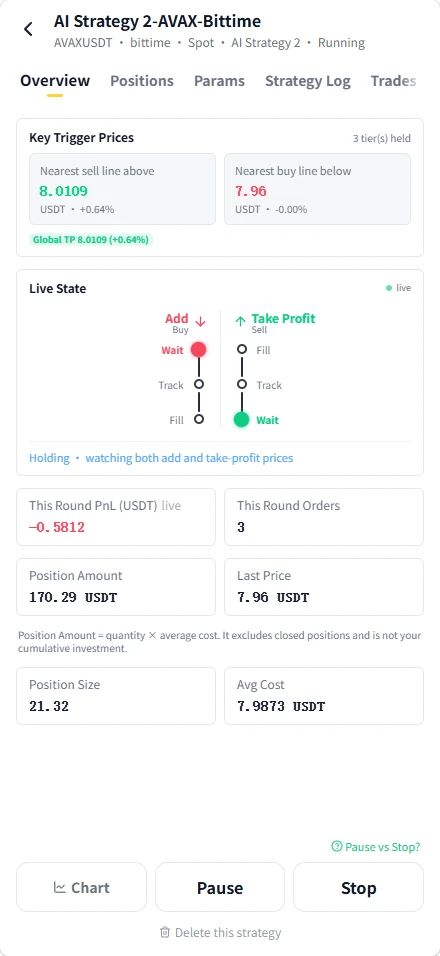
AI Strategy 2
Buy a little on dips, sell a little on rises
For when price is going back and forth, taking small ones each trip
Both can lose money — when the market doesn't cooperate, they lose too.
We're not going to dress that up. You should know it before you start.
You can step in at any time
Every setting is visible and editable. Nothing is hidden behind a switch you can't see.
Changes apply right away — no stopping and starting over.
It sells only when you press stop.
If something goes wrong, you hear it first: it stops and tells you, without touching your position. What happens next is your call.
We charge only when you make money
On every trade that makes money, we take 20% of it. On a losing one we take nothing, and there is no monthly fee.
Know this first: that 20% is counted on each winning trade on its own. It is not netted against the losing ones. So during a stretch when your account is going down, you can still be charged.
Direction · Not built yet
What we're setting out to solve next
The three things already done solve what happens before you start. What follows is where we're headed.
Where we're going
Phase 1: AI-driven crypto trading, across multiple exchanges
Phase 2: US equities
Phase 3: Foreign exchange and futures
We want it to explain itself in plain words
Right now the system makes a judgement and you only see the outcome. We want it to tell you, in one sentence, why it bought at that moment. You can only be at ease with something you can follow.
We want you to see, at any moment, where things stand
The three things before entry are done. After it's running, you still have to dig through layers yourself. We want to put that in front of you, readable at a glance. Making it readable is our job; whether to stop or switch stays yours.
We want starting to take fewer steps
There are still a handful between signing up and running. Our goal is that someone who has never traded can open it for the first time and get going.
This section is about direction, not features you have today. The three above are running. These three are on the way.
You can start now
Before you start
Crypto prices swing hard, and you can lose everything in your exchange account. Letting a system trade for you does not reduce that risk — when the market moves fast, it can lose more. Having made money before doesn't mean it will again. We don't promise you any return, and nobody can. Only use money you can afford to lose. You must be 18 or older.Read the full risk disclosure